





Transforming process industry
Implementing digital innovations such as advanced analytics or Industry 4.0 technologies becomes increasingly essential to stay ahead of the curve. IT vs. OT, connectivity vs. security or smart vs. smart enough - the challenge for owner-operators is to find just the right setup for their business.
The #digital innovation theme addresses the needs of experts, decision-makers as they plan their next steps on the digital transformation journey:
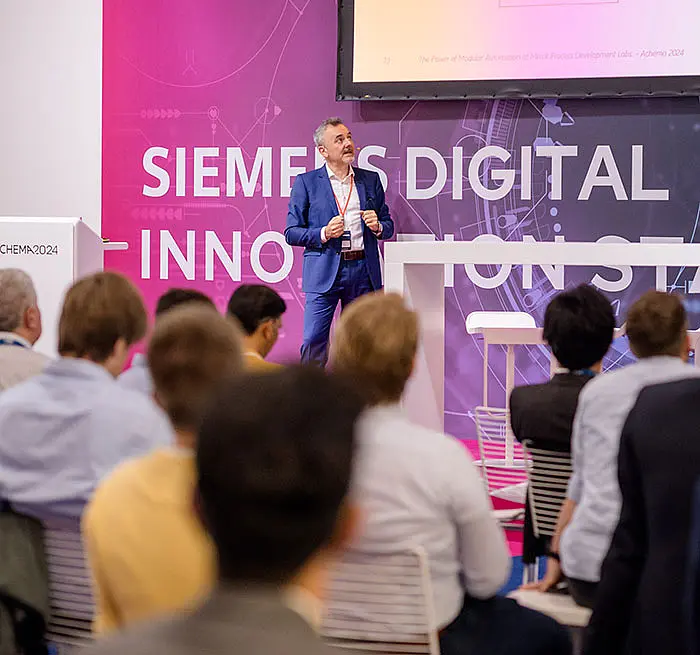
The Digital Innovation Stage zooms in on the current hot topics transforming process industry like:
Key notes, expert discussions and case-study presentations from both process industry users and solution providers will take the stage again for five days and provide new insights and ideas.
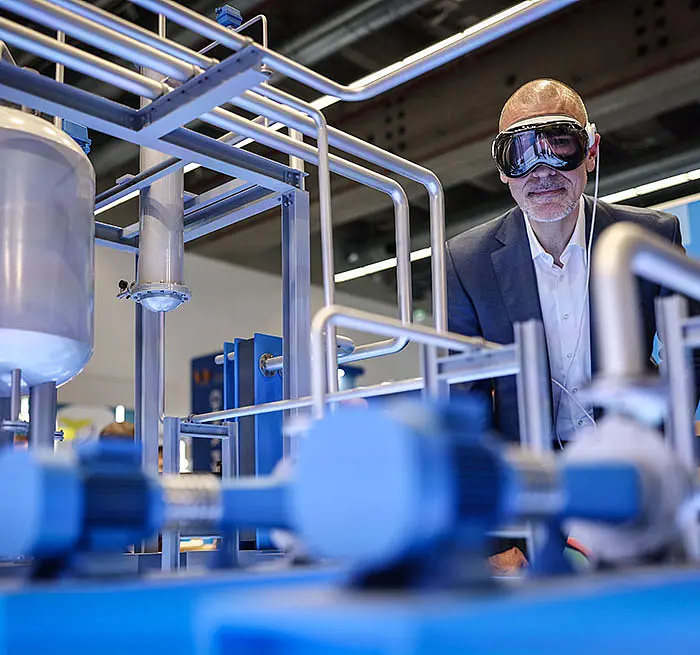
Digital innovations across all disciplines will be on display at ACHEMA, especially in exhibition groups like:
Engineering and Energy
Digital Hub
Instrumentation, Control and Automation Techniques
But also many equipment manufacturers in Mechanical and Thermal Processes or of Pumps, Valves and Materials will showcase smart use-cases and share best-practices at their booths.
As an essential part of ACHEMA, the congress is fully integrated into the exhibition programme and meeting place for researchers, developers, expert users and visionaries. The six Innovation Themes form the overarching framework for the congress programme.
Submissions are accepted until 4 October 2026.
For #digital innovation, you can submit a paper on one of the following topics:
AI is transforming the process industry by moving from advisory tools towards AI agents, feedback loops and digitally engineered workflows. Transferring from pilot projects to operational deployment, AI has demonstrated the potential to significantly improve efficiency across the entire asset life cycle. Key applications include process modelling, digital twins and AI-driven predictive maintenance. Contributions are invited on industrial AI use cases, deployment at scale, and challenges related to robustness, data quality, explainability, and human-AI.
Machine learning and AI-based methods are increasingly embedded in life science workflows, from target identification, principal component analysis (PCA), and molecular screening to bioprocess optimisation and quality control. As experimental, process and clinical data becomes more connected, AI can support actionable insights, validated decision-making and more efficient development and manufacturing workflows. Submissions addressing validated applications, domain-specific data integration, and requirements for AI/ML in regulated life science environments are particularly welcome.
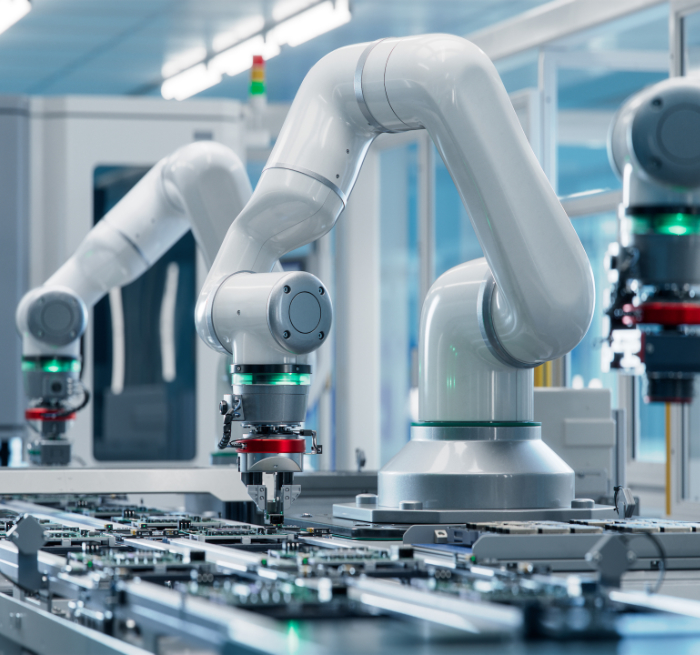
A remotely operated plant with limited human intervention is a key vision for the future of industrial production. Seamless digitalisation and connectivity are a prerequisite for autonomous decision-making while transparency, training and validation are essential to build human trust. Autonomous robots already perform inspection tasks, and humanoid robots are an emerging field of interest. Contributions on robotics, remote operations, human-machine collaboration, safety concepts and validation of autonomous systems in regulated, batch or continuous production settings are particularly welcome.
Connecting field devices, machines, and sensors through unified architecture are reshaping plant operations. The IT/OT convergence, supported by industrial communication standards and edge computing, enables real-time process visibility and reliable data exchange across production environments. Contributions are invited on connectivity architectures, field -level integration, interoperability, real-time data routing and practical implementations of connected production in industrial environments.
As process plants become more connected, the attack surface of industrial control and automation systems expands correspondingly. Protecting operational technology (OT) in chemical, pharmaceutical, and bioprocess environments requires targeted approaches that combine resilience, secure architecture and implementation under legacy system constraints. Contributions on OT-specific threat mitigation, secure system architecture, network segmentation, incident response, risk assessment, standards and regulatory compliance and implementation experience from industrial sites are invited.
Large volumes of process, sensor, and quality data generated across operations hold significant potential for product and process innovation. Turning raw operational data into actionable knowledge requires robust data architectures, high quality data management and analytical capabilities across laboratory, production, and enterprise systems. Contributions on data governance, integration and contextualising, analytical methods applied to real industrial datasets, and case studies demonstrating measurable innovation outcomes are particularly welcome.
The life science and process industries are constantly evolving: new challenges, the latest research results and innovative technologies and products are always on the agenda. That is why we want to keep you up to date with our news and articles on digital innovation.
Watch highlights from ACHEMA and the latest industry trends in our media library.
Theodor-Heuss-Allee 25
60486 Frankfurt am Main
Tel.: +49 69 7564-100