






05/13/2026 | Energy Innovation

From electricity to molecules: how process engineering makes the energy transition system-compatible

Wind and solar power are growing rapidly, but security of supply is only achieved when electrons become molecules. Hydrogen, ammonia and e-fuels fulfil the functions of storage, energy carriers and chemical feedstocks simultaneously – presenting a challenge to process engineering at every level.

As easy as it is to generate electricity today, the possibilities for storing, transporting or utilising it directly are limited. These limitations become apparent, for example, when energy needs to be available over longer periods, transported across continents or used in continuous industrial processes. The result is a shift in perspective: electrical energy is increasingly being converted into molecules. Hydrogen, methanol and synthetic fuels play a dual role here, acting as both storage and transportable energy carriers.

What was once just a technical option is gradually developing into a key element of the energy system. This is precisely where one of the central tasks of process engineering lies.

The storage problem of renewable energies

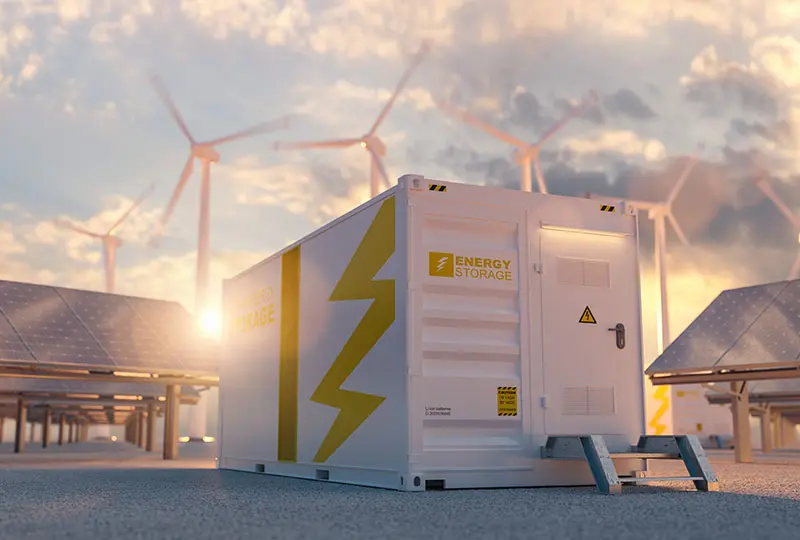
The fundamental problem is well known: wind and solar power plants generate electricity when the weather permits, rather than when industry needs it. Batteries can bridge gaps of a few hours and pumped-storage facilities can bridge gaps of a few days. However, for seasonal fluctuations, transport across continents or applications such as aviation, shipping and high-temperature processes, electrical storage systems are reaching their limits.

Molecular energy carriers can bridge this gap: hydrogen, ammonia, methanol and synthetic kerosene store renewable energy in chemical bonds, achieving energy densities that rival those of liquid fuels. These carriers can be transported via existing infrastructure, such as tankers, pipelines and terminals, and can be used flexibly.

Although global demand for hydrogen reached almost 100 million tonnes in 2024, this figure is misleading. This is because almost all of it continues to be used in traditional applications, such as in refineries and the chemical industry for ammonia synthesis and desulphurisation. New areas of application, such as synthetic fuels, climate-neutral steel production and other decarbonisation processes, currently account for less than one per cent of demand.

Fossil fuels also dominate the supply side: although low-emission hydrogen production rose by around 10 per cent in 2024, it remains marginal at less than one per cent of the global total. Processes with a significantly reduced carbon footprint are considered 'low-emission' – ranging from electrolysis using renewable electricity ('green') to natural gas reforming with carbon capture ('blue').

The gap between current levels and climate targets is therefore wide. The International Energy Agency’s (IEA) ‘Net Zero Emissions by 2050’ scenario forecasts that, by 2030, around 40 per cent of hydrogen demand will be accounted for by new industrial and long-distance transport applications – today, the figure is well under 1 per cent. Even if all announced policy measures take effect, demand for low-emission hydrogen could rise to just over 6 million tonnes by 2030. While this sounds significant, it would only amount to around a tenth of what is required for the net-zero pathway.

The transformation has begun, but the gap between ambition and reality remains enormous. It is precisely this gap that is currently driving the worldwide technological ramp-up.

Electrolysis: The heart of the process chain

Hydrogen production is at the start of every power-to-X chain. In practice, two technologies have emerged: alkaline electrolysis (AEL) and proton exchange membrane electrolysis (PEM). Both processes are commercially available, but they differ in their operational behaviour. PEM systems react quickly and can be started up from a cold state, allowing partial-load operation at 3 to 10 per cent of the rated load. In contrast, alkaline electrolysers are slower and typically only achieve 20 to 40 per cent partial load. This makes PEM particularly attractive for coupling with fluctuating wind and solar power. At the same time, however, modern 'Advanced Alkaline' systems are catching up in terms of load flexibility.

A closer look at costs is also worthwhile: the often-cited advantage of AEL at stack level is offset at plant level when peripherals, electrolyte management and maintenance are considered. At system level, the efficiencies of both technologies are now very similar. Current studies estimate the energy requirement for PEM at 4.1–4.4 kWh and for AEL at 4.6–4.8 kWh per standard cubic metre of hydrogen. A third option is high-temperature electrolysis (SOEC): utilising industrial waste heat could achieve theoretical efficiencies of up to 90 per cent. However, the technology is still in the scaling-up phase.

Alongside established technologies, anion exchange membrane electrolysis (AEM) is emerging as another option. It combines design elements from both PEM and AEL systems: the use of cost-effective materials from alkaline electrolysis with the compact design and potentially higher current densities of PEM systems. This results in a promising profile, particularly with regard to investment costs and material usage. Nevertheless, the technology is still in the early stages of market development. Questions regarding long-term stability, scalability, and operation under real-world load profiles have yet to be conclusively resolved. Consequently, AEM is currently being tested primarily in pilot and demonstration plants. Whether and when it will develop into a third industrial standard, alongside AEL and PEM, remains to be seen, though the potential is evident.

However, the real challenge no longer lies in the individual technology, but in the overall system. A gigawatt electrolyser directly coupled to a solar park often achieves an annual average of only 2,000–4,000 full-load hours. This creates new requirements for buffers, thermal management and flexible operating modes. Consequently, the focus is shifting from the design of the electrolyser to its integration into a volatile energy system.

Sinopec’s Kuqa project in the Chinese province of Xinjiang demonstrates just how challenging this integration can be in practice. With an electrolysis capacity of around 260 MW, the plant reached a scale in August 2023 that equalled the total installed capacity in the EU at that time. However, in its first year of operation, capacity utilisation was only around 20 per cent of the planned annual production. The bottleneck lay not in the electrolyser itself, but in the system: a 300 MW solar park as the sole energy source inevitably feeds power in a volatile manner, while large-scale electrolysers reach their efficiency and safety limits when operating at low load. This project is therefore regarded as a key example, as green hydrogen is produced through the interplay of power generation, process control, and industrial off-take, not solely in the electrolyser.

CO₂ as a raw material: Carbon management as a core process engineering task

In addition to hydrogen, the production of synthetic fuels and methanol requires a second component: carbon dioxide. Point sources such as cement works, refineries and biogas plants can supply concentrated CO₂ streams at a comparatively low cost. According to a recent DECHEMA analysis of CO₂ sources and PtX value chains, these sources will remain the primary carbon source for Power-to-X applications in the foreseeable future.

Direct air capture (DAC) is significantly more costly. Even at an industrial scale, current analyses estimate long-term costs at around 230–540 US dollars per tonne of CO₂, which is significantly higher than the cost from point sources. This is due to the physics involved: with a CO₂ concentration of only around 0.04 per cent, enormous volumes of air must be moved and processed. This increases energy requirements and places clear limits on the learning curve.

Regardless of the CO₂ source, however, it is primarily process integration that determines the efficiency of the entire plant. In integrated plants, heat from CO₂ desorption can be used directly in downstream synthesis processes, while residual water from electrolysis can partially supply the capture process. Studies on integrated capture-and-conversion concepts show potential savings of 20–30 per cent compared to non-integrated processes, and even higher in optimistic scenarios. In its report, 'Carbon for Power-to-X', DECHEMA reaches a similar conclusion: efficient PtX value chains depend more on the well-thought-out integration of suitable CO₂ sources into the overall process design than on the individual technology.

The Kassø project in South Jutland, Denmark, demonstrates this in practice: green hydrogen from wind power and biogenic CO₂ from a neighbouring biogas plant are converted into e-methanol there. According to the operator, this reduces greenhouse gas emissions by up to 97 per cent compared to fossil fuels.

Power-to-Liquid: Synthesis, Reactors, Efficiency

The conversion of hydrogen and CO₂ into liquid energy carriers takes place via various synthesis routes. The dominant methods are direct hydrogenation to methanol and the Fischer-Tropsch synthesis. Methanol synthesis produces fewer by-products, whereas the Fischer-Tropsch process, which uses synthesis gas, yields a broader range of products requiring additional processing steps.

Both routes share a fundamental energy problem: currently, only 25 to 40 per cent of the renewable energy input ends up in the liquid end product. The rest is lost as heat or must be laboriously recycled back into the process. New reactor concepts aim to limit these losses. Membrane reactors continuously remove a reaction product from the reaction chamber, thereby shifting the equilibrium towards higher yields. Reactors with integrated sorption (SER) take a similar approach, selectively binding a reaction partner. Both concepts allow for more compact plants and integrate the reactions and separations much more closely than conventional processes.

INERATEC is taking a different approach with its 'Era One' plant, opened in June 2025 at the Frankfurt-Höchst Industrial Park. Rather than relying on a single large-scale reactor, the company is combining numerous microstructured Fischer-Tropsch reactors into standardised modules. This modular design allows for gradual capacity expansion and high load flexibility — a decisive advantage when dealing with fluctuating CO₂ and hydrogen flows. The plant will process up to 8,000 tonnes of CO₂ annually, producing around 2,500 tonnes of synthetic crude oil. This will then be further processed into e-kerosene, e-diesel, and chemical precursors.

However, Fischer-Tropsch is not the only method of producing synthetic kerosene. Methanol can also serve as a platform molecule: via the methanol-to-jet pathway, it can be processed into aviation fuel. At the same time, methanol opens up further applications. It can be used directly as marine fuel or as a feedstock for low-soot diesel alternatives such as oxymethylene ether (OME) and dimethyl ether (DME). This development is also being driven by regulation: the EU’s ReFuelEU Aviation Regulation stipulates a minimum share of two per cent sustainable aviation fuels from 2025, rising to as much as 70 per cent by 2050.

However, the key issue here is the definition of what counts as a renewable fuel. The EU Delegated Regulations on 'Renewable Fuels of Non-Biological Origin' (RFNBO) set out the conditions under which electricity-based fuels can count towards these quotas, including the origin of the electricity used and the timeframe for generation and use. This not only regulates demand, but also shapes the underlying production processes, with far-reaching consequences for investment decisions.

Infrastructure and global trade corridors

Production is only half the task. A functioning market can only emerge alongside transport and infrastructure. Currently, four competing pathways are emerging for the global trade in green hydrogen: ammonia, liquid hydrogen, liquid organic hydrogen carriers (LOHC) and pipelines. Ammonia is considered the most economically attractive option for large volumes and long distances. While the substance benefits from existing port and transport infrastructure, it also presents challenges: ammonia is toxic, and additional energy is required for cracking at the destination.

This gives rise to specific process engineering requirements, ranging from suitable materials and sealing concepts to the design of safe operating and emergency systems. When handling hydrogen and ammonia in particular, phenomena such as material embrittlement, leakage risks and safe process control play a central role.

Therefore, the choice of energy source also affects plant design. Large-scale, centralised plants follow traditional scaling laws, while modular concepts with smaller material inventories allow for new approaches to plant safety. Therefore, the question “How big?” is increasingly being complemented by “How granular?” This is an aspect that is likely to have a significant impact on process engineering in the coming years.

LOHC systems take a different approach, chemically binding hydrogen into a liquid to enable transport under ambient conditions without the need for cryogenic technology or high pressure. As early as 2020, Chiyoda demonstrated that this concept works with a supply chain from Brunei to Japan based on methylcyclohexane (MCH). The technology has now reached commercial scale. Since 2024, Chiyoda has operated a dehydrogenation plant in Singapore for fuel cell trucks. Meanwhile, Hydrogenious is developing the 'Hector' project in Germany: a LOHC storage facility at Chempark Dormagen which is set to supply around 1,800 tonnes of hydrogen to the Danube region annually from 2027.

The technology decision has already been made for the major NEOM project in Saudi Arabia: the green hydrogen produced there is to be fully converted into ammonia. This will be powered by around 4 gigawatts of wind and solar capacity, as well as approximately 2.2 gigawatts of electrolysis capacity. The plant will produce around 600 tonnes of hydrogen per day, which will be converted into approximately 1.2 million tonnes of ammonia per year. This makes NEOM one of the world's most ambitious individual projects today. However, the project's feasibility depended more on the business model than the technology: an exclusive 30-year off-take agreement with Air Products secures the entire production and formed the basis for the US$8.4 billion in financing.

This example illustrates a point that applies to the entire sector: while process technology can be scaled up to the gigawatt level, reliable markets and long-term, secure off-take agreements emerge much more slowly and ultimately determine every investment.

The crucial question: who is buying?

Demand will determine whether the transformation succeeds. Process engineering can scale processes, increase efficiency, and modularise plants. However, without long-term, secure off-take agreements, every investment remains risky and is often unfinanceable.

The main reason for this lies in the costs. Green hydrogen is currently generally many times more expensive than conventionally produced ('grey') hydrogen. While the latter often costs between 1 and 2 US dollars per kilogramme depending on the price of natural gas, green hydrogen often costs between 4 and 8 US dollars per kilogramme or more. This difference shapes the market and explains why new applications have been slow to emerge so far. Additional costs arise along the value chain for transport and storage. For example, concepts such as LOHC enable transport at ambient conditions; however, they require energy-intensive hydrogenation and dehydrogenation processes, which directly impact the overall costs.

Regulation intervenes accordingly. In Europe, for example, quotas, difference contracts and certification systems are intended to create targeted demand, while the above-mentioned RFNBO criteria are intended to ensure that additional renewable capacity is actually built. However, these criteria are controversial as they significantly increase the complexity of projects in practice and have already led to delays in investment decisions in Europe.

Other regions are deliberately taking a different approach. In the US, for example, the Inflation Reduction Act promotes hydrogen production by offering tax incentives such as the 45V credit. Unlike the European approach, the focus here is less on defining the origin of electricity in detail and more on rapid scaling through economic incentives.

A new energy infrastructure is gradually emerging worldwide, from Danish e-methanol exports and Saudi Arabian ammonia projects to e-fuel plants in the wind-rich south of Patagonia. Process engineering provides the processes, and the cost curves are pointing in the right direction. However, whether this will result in a viable, climate-neutral system is not solely decided in chemical plants, but also by regulatory authorities, financiers and in the largely open markets for green molecules.

Author

Armin Scheuermann

Chemical engineer and freelance trade journalist

Newsletter

Always up to date

With our newsletter you will receive current information on ACHEMA on a regular basis. You are guaranteed not to miss any important dates.

Subscribe now

Tickets
Contact