


06/29/2026 | Process Innovation

Chemical plant engineering: a new landscape

Global chemical plant engineering has undergone a reshuffle since ACHEMA 2024. While decarbonisation previously set the pace, energy prices, geopolitics and locational advantages now also determine where investments are made, projects are planned and construction is carried out. For the chemical plant engineering sector, this means that the volume of work is not decreasing. It is simply shifting towards areas where raw materials, energy and permits are reliably available.

Five years on from the shock of the global pandemic, three years on from the shock of the energy price surge triggered by Russia’s war of aggression, and one year on from the shock of the trade policy changes prompted by new US tariffs, the situation in global chemical plant engineering remains challenging, but the outlook is clearer. Investment flows have been reoriented, and the technologies that will shape the next investment cycle are now being implemented on construction sites. Demand is still present, but it is distributed differently than it was just a few years ago. Capital is flowing to areas where raw materials are cheap, energy prices are predictable, and the political framework is stable. Unlike previous cycles, this time it is not a temporary weakness in Europe, but a new industrial landscape.

Investment is shifting towards raw material hubs

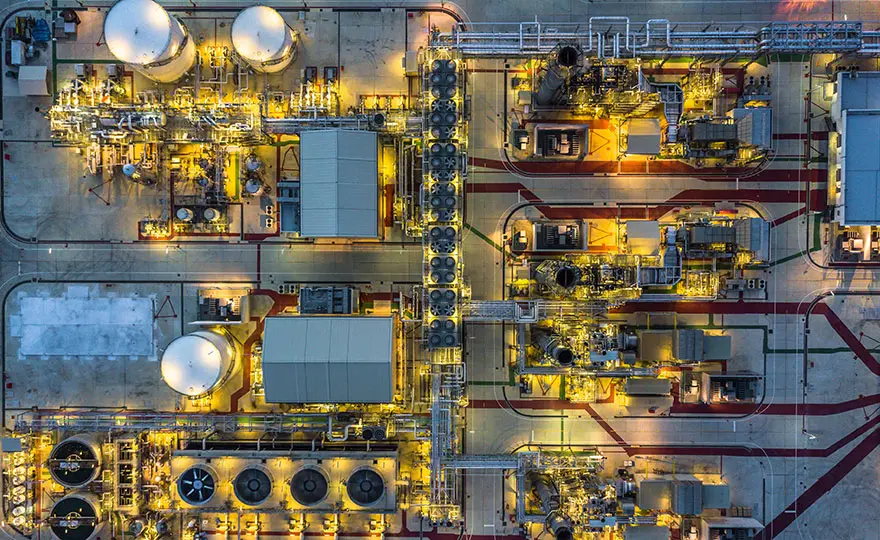
Industry analyses and data from the IEA and Cefic indicate that the majority of new petrochemical investments are being directed towards Asia and the Middle East, with Europe accounting for only a small percentage. At the same time, the focus of projects is shifting. LNG plants are being planned with CO₂ capture; refineries are being expanded into integrated petrochemical complexes; and hydrogen and recycling plants are being scaled up. Engineering processes are also being digitised. Thus, chemical plant engineering remains a key sector in industrial transformation, albeit one that is proceeding in a far more pragmatic manner than many net-zero roadmaps from 2020 and 2021 might have suggested.

The plant engineering association VDMA sums it up: "The transition to climate-neutral technologies is proceeding more slowly than expected."

A glance at the global CAPEX map reveals the extent of this change: the Asia-Pacific region now accounts for nearly two-thirds of petrochemical investments, while the Middle East accounts for around a quarter. China continues to build integrated complex sites, while India is evolving from a future market into a strategic counterweight in the global chemical supply chain. North America accounts for around ten per cent, driven by ethane from shale gas, reindustrialisation, and demand from the semiconductor and AI infrastructure sectors. Europe stands at around five per cent, losing traditional chemical capacity faster than new capacity is being built.

Prominent examples of these developments include BASF’s new integrated site in Zhanjiang, southern China, which has received investment of nearly €9 billion, and INEOS Project ONE in Antwerp, Belgium. The latter project aims to show that significant investment in Europe is possible despite major challenges: around €4 billion is being invested in a modular ethane steam cracker with the lowest possible carbon footprint, achieved through ultra-low-NOx burners, hydrogen firing, CCS options and preparations for future electrification. Nevertheless, INEOS founder and CEO Jim Ratcliffe has expressed concerns about the unsustainable conditions facing the European chemicals industry, citing site closures, lost capacity, and mounting energy and CO₂ costs. Project ONE therefore seems to be more proof of just how difficult it is to realise new, large-scale basic chemicals projects in Europe. The conditions for the new BASF site in Zhanjiang are also currently unfavourable: in the short term, the plant will face a Chinese market characterised by overcapacity and margin pressure, indicating that Europe’s problems cannot be solved simply by relocating to Asia and that location and technology risks are higher there too.

Conflicts and tensions in the Middle East further complicate the shifting CAPEX landscape. This makes it clear that physical security, redundancy, and the insurability of plants are once again key criteria for location and project decisions.

For chemical plant engineering, this means that, alongside the expansion of raw material sites, resilience and the hardening of critical infrastructure are gaining in importance, as are concepts for rapid restart capability and the targeted review of supply chains for critical components such as special alloys, compressors and process valves. The availability of these components is increasingly dependent on geopolitical factors.

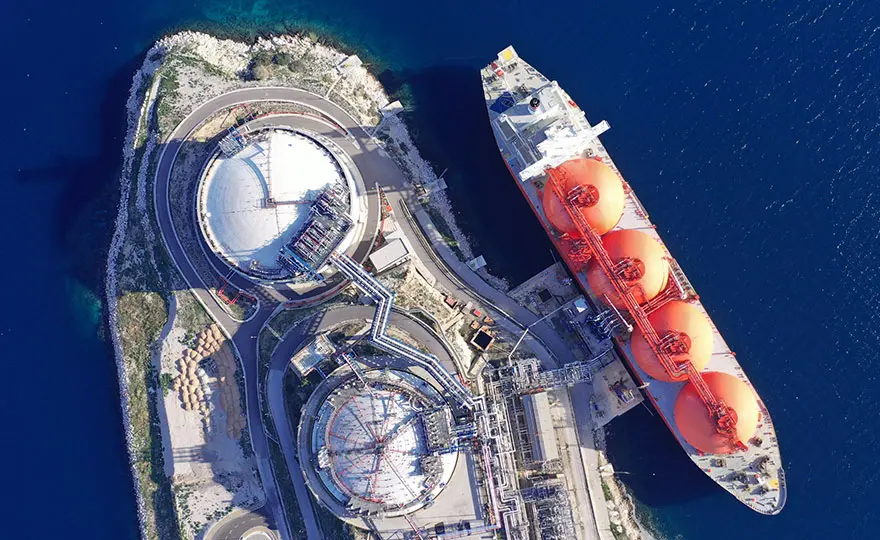
What appears to be a regional imbalance on the face of it follows a strict economic logic: new large-scale facilities are built where energy and raw materials will be available in the long term. Qatar Energy is therefore increasing its LNG export capacity from 77 to 142 million tonnes per annum. The North Field West project, which comprises two LNG megatrains, each with a capacity of eight million tonnes per annum, was awarded to a consortium led by Technip Energies. Remarkable not only for its scale, the design incorporates carbon capture and storage (CCS) on a scale of millions of tonnes. Here, CCS is not a climate commitment, but rather a business model requirement. LNG with a lower carbon footprint commands higher prices and strengthens market position in an environment where security of supply and carbon footprint are equally important. For plant engineering, this sends a clear signal that carbon management is moving from the backdrop of production into the specifications of mega-projects.

A similar trend is evident in Saudi Arabia. The Amiral complex in Jubail, which has received around $11 billion in investment, demonstrates how Saudi Aramco and TotalEnergies are systematically expanding the creation of value in the petrochemical sector. This project, like the expansion of the Fadhili gas complex, forms part of a long-term strategy whereby crude oil and natural gas will be refined into chemical products for domestic use as well as being exported.

India is the second major growth story. Its economy is growing faster than that of most other G20 countries, and domestic demand for plastics, fertilisers, and speciality chemicals is rising rapidly. At the same time, the country is massively benefiting from the global 'China-plus-one' strategy: international corporations are actively seeking opportunities to diversify their supply chains and reduce their geopolitical dependence on China, while still accessing the Asian growth market. Government support programmes, competitive labour costs, and a clear political will to establish India as a global counterweight will make the country one of the most important markets for chemical plant engineering in the coming years. The Indian chemical industry is currently worth around $220 billion, and is expected to exceed $1 trillion in the long term.

North America follows a different logic. Shale gas remains a locational advantage, but the new impetus comes from reindustrialisation, semiconductors and artificial intelligence (AI). Data centres require electricity, cooling and grid infrastructure on a scale that is triggering new power plant and utility projects. Semiconductor factories require ultra-pure gases, solvents and chemicals. For plant engineers, this results in contracts that, while perhaps less spectacular than an LNG megatrain, are technologically sophisticated and politically secure.

Major EPC providers are sharpening their profiles

Global EPC companies are responding to this new capital landscape by sharpening their focus rather than broadening their market reach. Access to technology, front-end expertise and risk discipline are becoming more important than mere construction capacity. Those who control the FEED, process licence and engineering stack are in pole position for subsequent EPC contracts.

The market is correspondingly large: in the oil and gas sector alone, the global EPC volume for 2025 is estimated at $55–60 billion, while the total EPC market across all sectors exceeds $100 billion.

Leading international EPC groups such as Bechtel, Fluor, Technip, Saipem and Worley each generate annual revenues in the high single to mid double digit billions and are involved in most mega projects in LNG, refining, chemicals and energy.

Technip Energies is a striking example of this. Since its spin-off from TechnipFMC, the company has consistently pursued a 'technology plus EPC' strategy. The plant engineer expects to achieve the highest order intake in its history by 2026. LNG remains a core area, with sustainable fuels and catalysts now added to the mix. Strategic acquisitions are strengthening the portfolio. Suppliers of technology open the door to major projects. Linde Engineering and thyssenkrupp Uhde also operate in a technology-driven manner, combining their own processes for hydrogen, ammonia, and sustainable basic chemicals with EPC expertise.

Samsung E&A is focusing more on regional depth. The company’s focus lays on the Middle East and Asia, and has numerous references in Saudi Arabia and Qatar, particularly in PDH/PP plants. The principle is simple: knowing the location, client, authorities and technical history reduces project risks and increases the chances of securing the EPC contract. At the Ras Laffan Petrochemical Complex in Qatar, Samsung E&A is working alongside CTCI on one of the region's largest ethylene projects. Asian competitors such as Hyundai Engineering & Construction are driving forward major crude-to-chemical projects, including S-Oil’s Shaheen project in Ulsan, South Korea. They are also transferring this expertise to Aramco programmes, including Amiral. Consequently, a growing proportion of EPC expertise for refinery-to-petrochemical projects is shifting to East Asia.

Worley has adopted a business model based on sustainability, focusing on areas such as offshore wind, green hydrogen, CCUS, battery storage and electrification. Crucially, as shown above, this demand is by no means limited to Europe. Sustainability is therefore no longer merely a regulatory issue, but a market requirement.

KBR and Fluor illustrate the second lesson learned in recent years: risk is being redistributed. According to its own figures, Fluor has increased the proportion of contracts billed on a time-and-materials (reimbursable) basis to 87%.

Fixed-price contracts are becoming less attractive for large-scale plant construction projects because material prices, supply chains, construction labour costs and geopolitical risks are increasingly difficult to estimate reliably. For clients, this means greater cost responsibility and higher demands for robust front-end engineering.

In this context, 'robust' means reliable cost and schedule estimates from the outset, a clearly defined scope, consistent data and interfaces, and variant comparisons that minimise subsequent changes. A well-developed FEED reduces costly changes in detailed engineering and on-site work, accelerates decision-making processes, and establishes a basis for reliable award and financing decisions. Companies that excel in this area achieve higher margins on average because they price risks more effectively, manage claims more efficiently, and spend less time on unproductive rework. Poorly prepared projects become more expensive. Saipem is following this pattern too: less fixed-price onshore work and more offshore gas services and margin discipline, rather than growth at any cost.

Conclusion: Capital geography as a stress test for plant engineering

Chemical plant engineering is not in crisis; it is undergoing restructuring. Investment is shifting to raw material and energy hubs, while Europe is transitioning from a core market to a selective location for particularly efficient, regulation-intensive projects. Major projects that will shape the next investment cycle are emerging in Qatar, Saudi Arabia, India and North America – often linked to gas, CCS and petrochemical value creation, but subject to significantly higher safety and resilience requirements.

For major EPC providers, this new landscape is a stress test: those who can combine access to technology, front-end expertise, regional depth and sound risk structures will be able to grow amidst this shift, whereas those who rely on construction volume and lump-sum contracts will come under pressure.

Therefore, the real question for the coming years is not whether investment in chemical plant construction will continue, but rather which locations and partners will secure the projects that are still being built in a riskier, more expensive and politically fraught world.

While the new landscape of chemical plant engineering answers the question of where investment is taking place, it remains to be seen how the industry can decarbonise, make projects financially viable, and use scarce resources productively under these conditions. This is the focus of the second part of this trend report.

The second part of this trend report examines how the chemical plant engineering sector is responding to this new landscape, both technologically and organisationally – from decarbonisation and CCS, through partnerships, to AI, data platforms and leaps in productivity.

Author

Armin Scheuermann

Chemical engineer and freelance trade journalist

Here you can download the current trend report for your journalistic work:

Trend report - Chemical plant engineering: a new landscape (MS Word file)

About ACHEMA

ACHEMA is the world forum for chemical engineering, process engineering and biotechnology. The world’s leading show for the process industry takes place every three years in Frankfurt. The spectrum ranges from laboratory equipment, pumps and analytical devices to packaging machinery, boilers and stirrers to safety technology, materials and software, thus covering all the needs of the chemical, pharmaceutical and food production industries. The accompanying congress, featuring scientific lectures and numerous guest and partner events, complements the wide range of exhibition themes.

The next ACHEMA will take place from 14 to 18 June 2027 in Frankfurt am Main.

Tickets
Contact