




© shutterstock_2133921963

Rethinking Energy

#energy innovation

The process industries in particular need new, innovative solutions for reliable, efficient and sustainable energy. Mastering this increasingly complex issue is becoming a decisive factor in global competition. At the same time, chemistry and biotechnology offer exciting approaches to meeting energy-related challenges.

Competitive and sustainable process industries

Energy innovation covers all areas relevant to the process industry of the future:

  • Increasing energy efficiency and security of supply helps to reduce the overall energy cost, decrease dependencies and increase competitiveness.
  • Direct electrification of the industries’ processes is an enabler for integration of renewable electricity, sustainable production and new business opportunities for flexible operation.
  • Stabilizing energy supply via energy storage solutions allows to optimize your business cases without sacrificing operational safety and product quality.
  • Hydrogen and PtX-Technologies provide energy supply where the use of molecular energy carriers remains advantageous. Moreover, they open new options for a sustainable feedstock. 
  • Carbon capture and utilization/storage technologies (CCU/CCS) are essential for a timely emission reduction, build a potential new carbon source and make net-zero or even negative emissions possible.

These and other topics will be explored on the Energy Innovation Stage through keynote presentations, panel discussions, and case studies from users and solution providers. This will provide ACHEMA 2027 attendees with exciting new insights throughout all five days of the trade show, sparking new ideas that will be developed collaboratively.

Pick-up on the latest developments 

The exhibition group Engineering and Energy in Hall 5.1 highlights the importance of both industries for further technological and economic development. ACHEMA 2027 will bring together the key players who are driving solutions to transform the industry toward enhanced sustainability and stronger competitiveness.

Many manufacturers and suppliers from the following sectors will also support this transformation with technical solutions and services:

  • Instrumentation, Control and Automation Techniques
  • Pumps, Valves and Materials
  • Laboratory and Analytical Techniques
  • Industrial and Labour Safety

The ACHEMA Congress

As an essential part of ACHEMA, the congress is fully integrated into the exhibition programme and meeting place for researchers, developers, expert users and visionaries. The six Innovation themes form the overarching framework for the congress programme. 

Submissions are accepted until 4 October 2026.

For #energy innovation, you can submit a paper on one of the following topics:

#energy innovation

#energy: Hydrogen production incl. innovative & alternative routes

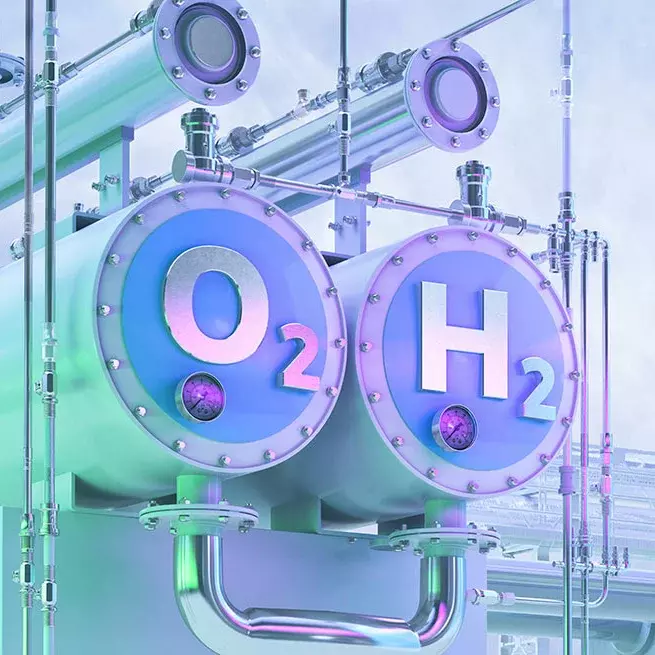
Hydrogen is a key energy option to decarbonize processes that can’t use direct electrification. Low-carbon hydrogen can be produced as 'blue hydrogen' through steam reforming of methane with subsequent CCS, via biomass of waste or as 'green hydrogen' through water electrolysis using renewable electricity. In the latter case, various technologies can be employed, such as alkaline electrolysis, PEM-electrolysis, or high-temperature electrolysis. Another option for hydrogen generation is methane pyrolysis, in which natural gas is split into hydrogen and carbon. In any case, the processes should be analysed and classified in terms of their ecological (life cycle analysis) and economic (techno-economic analysis) aspects. For all low-carbon hydrogen production processes, technologies for upscaling and industrialization are of particular interest.

  • Water electrolysis
  • Methane pyrolysis
  • Steam methane reforming (SMR)
  • Life cycle analysis & techno-economic analysis
  • Low-carbon hydrogen
  • Industrial scale-up

#energy: Power to X processes incl. sustainable aviation fuels & eFuels

Power-to-X (PtX) technologies offer climate-friendly solutions to make renewable energy more accessible for industry. By utilizing green hydrogen as an energy carrier and a raw material for basic chemicals, alternatives to fossil resources are being created. With green hydrogen and CO2 as the key components for PtX, a myriad of fuels and materials can be produced. The green hydrogen derivatives green ammonia and e-methanol are targeted as ideal intermediates to ship higher energy density and substitute fossil counterparts for fertilizers and chemicals produced at a megaton scale globally. Moreover, the industrial scale of e-Fuel production is required for the aviation sector. Sustainable aviation fuels (SAF) can be deployed via two major PtX routes: Methanol-to-Jet and the Fischer-Tropsch-Synthesis. PtX research and development has seen major advancements in terms of scale, reactor design, and catalysts, enabling the transition toward hard-to-electrify sectors. Contributions detailing technical developments or industrial applications across the entire Power-to-X value chain are invited for submission.

  • Power-to-X and Power-to-Liquid
  • Sector Coupling
  • E-Methanol & green ammonia
  • Synthetic fuels, e-Fuels, SAF
  • Fischer-Tropsch-Synthesis & Methanol-to-Jet

#energy: Carbon capture & utilisation / storage

With increasing pressure to decarbonise industrial sectors, the implementation of CCUS in the process industry has become inevitable. CCS provides a pathway to mitigate emissions from established industrial assets while transitioning toward a fully renewable system. Moreover, captured carbon dioxide can be treated as an additional chemical feedstock, reducing resource dependency. In particular, hard-to-abate sectors, such as cement production, can contribute by treating carbon dioxide as a resource for base chemicals, including methanol, DME, urea, and carbonyls. Mature technologies, such as MEA absorption, now exist alongside recent developments in advanced adsorption using Metal-Organic Frameworks (MOFs). Furthermore, atmospheric CO2 can be harvested via Direct Air Capture (DAC). To support these CCUS advancements, the process industry requires an integrated CO2 network—featuring state-of-the-art compression, liquefaction, piping, and storage capacity—to enable deployment at an industrial scale. We invite submissions focusing on CCUS along the whole process chain, including innovative capture technologies, CO2 transport infrastructure, and industrial utilisation pathways.

  • CCUS
  • DAC
  • Carbon removal & management
  • CO2 absorption & adsorption
  • Chemical feedstock
  • Carbon sequestration
  • CO2 transport networks

#energy: Energy efficiency

Improving energy efficiency remains one of the most important levers for the process industry to reduce operating costs and energy-related GHG emissions while conserving resources. The key areas of heat integration, waste heat recovery and industrial high-temperature heat pumps are gaining importance alongside the electrification of process heat. Valuable CO2 reduction contributions through pinch analysis and optimization of heat networks, as well as efficiency assessment methods, are essential building blocks for a future process industry. On the demand side, analyses of the flexibility of the chemical and petrochemical process industries are more necessary than ever.

  • Optimization of heat networks
  • AI perspectives for energy optimization
  • Energy efficient (smart) processes
  • Energy efficiency assessment methods

#energy: Alternative energy input

Replacing fossil energy sources with renewable or low-carbon alternatives is a key challenge for process industries. Candidates are direct electrification via resistance, induction microwave or plasma heating. Additionally, solar thermal heat sources as well as biomass-derived energy offer pathways to decarbonize industrial processes and chemical reaction systems.

Submissions are invited on alternative energy input, system integration in chemical plant environments and process adaptations, including techno-economic assessment and carbon footprint analysis für processes using alternative sources of energy. 

  • Electrification of industrial process heating
  • Solar thermal process heat
  • Biomass-derived energy
  • Alternative energy carriers
  • Process decarbonisation
  • Techno-economic assessment

#energy: Electrification of processes

As energy transition advances and renewable energy’s share grows, electrification offers a key lever to reduce emissions and decrease fossil dependence in process industries. The electrification of process heat, plasma technology, and electrolysis-based production routes are gaining growing attention for industrial applications, with potential for innovation and optimisation from both a technical and economic perspective. We invite submissions on the technical realisation and concepts of electrified processes, as well as their integration within industrial sites and electricity grids.

  • Process and reactor design
  • Materials compatibility
  • Electrified steam generation
  • (Co-) electrolysis
  • Plasma technology
  • Grid and site integration
  • Flexible operation

#energy: Energy storage & integration

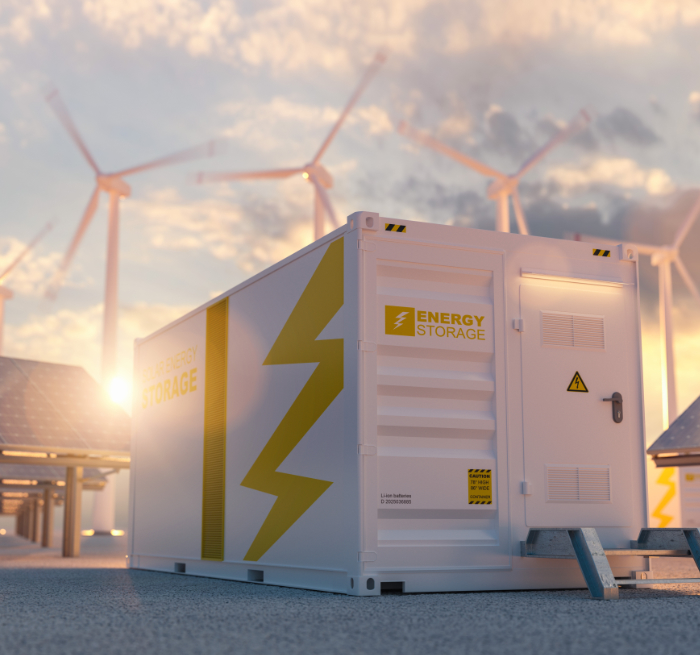
A reliable and flexible energy supply in the process industry increasingly depends on the effective storage and integration of energy across various energy carriers and time periods. Energy storage systems like thermal energy storage, electrochemical battery systems, or hydrogen-based storage each offer specific properties suitable for different industrial applications. Contributions to the selection and dimensioning of storage technologies, site-specific integration and demand-side flexibility strategies, as well as operational and safety aspects in industrial plant environments, are essential. Contributions to these topics are requested.

  • Thermal energy storage
  • Electrochemical battery storage
  • Hydrogen-based energy storage
  • Integration of renewable energies
  • Demand flexibility
  • Design of industrial energy systems
  • Multi-carrier energy storage

#energy: Industrial heat innovation

Industrial heat accounts for a substantial share of energy demand in the process industries, spanning a wide temperature range from low-temperature heat to high-temperature processes up to 2000°C. Ongoing improvements in high-temperature heat pumps, the electrification of industrial heat, heat exchanger designs, and advanced refractory materials are opening new opportunities for industrial innovation. Submissions are invited on industrial heat generation, transfer and recovery technologies, temperature upgrading, and site-level heat system integration.

  • Low-carbon heat supply
  • Industrial heat pumps
  • Heat exchanger innovation
  • Direct resistance and induction heating
  • Microwave and plasma heating
  • Refractory and insulation materials
  • Temperature upgrading
  • Industrial heat system integration

Industry Insights

The life science and process industries are constantly evolving: new challenges, the latest research results and innovative technologies and products are always on the agenda. That is why we want to keep you up to date with our news and articles on energy innovation.

To the article overview

Watch highlights from ACHEMA and the latest industry trends in our media library.

To the Media Library

Tickets
Contact