




Pharma Innovation

With your personal myACHEMA account you have access to all extended features of ACHEMA online and to services associated with your participation in our events.
No myACHEMA account yet?
The ACHEMA Exhibitor Portal provides all information, documents and services for your ACHEMA 2027 participation.
11/10/2026 | Energy Innovation
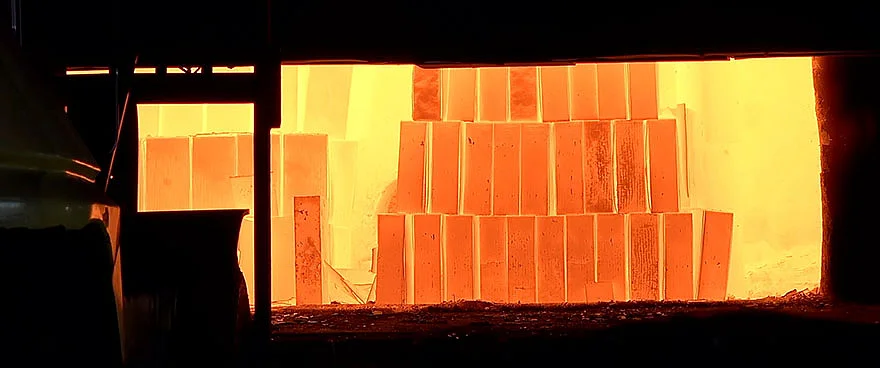
A handful of signatures on a brick – that is how unpretentiously a technical revolution began on 16 January 2026 at the Brunsbüttel chemical site. The plastics manufacturer Covestro is building a battery in northern Germany that will not feed electricity back into the grid. Instead of lithium-ion cells, from the end of 2026, refractory bricks there are to be heated to temperatures of up to 1,500 °C – using electric heat generated from wind and photovoltaic power. The thermal battery, built by Rondo, will store up to 100 MWh of heat to later generate steam via hot air.
What may initially sound like a detour is, for Covestro, the logical solution: steam is one of the key utilities in the chemical industry and has so far been generated in Brunsbüttel using natural gas. Up to 13,000 tonnes of CO₂ emissions could be saved year on year in future. As few changes as possible are to be made to the production facilities themselves. The storage system is situated upstream of the existing steam system – acting as a thermal buffer between the electricity market and the chemical process.
The key advantage here is that the rate of charging can in future be adjusted to match supply: plenty of wind, low electricity prices – charge the storage system. Production will nevertheless continue to receive steam at a constant pressure and defined temperature, because, after all, a reactor is not concerned with whether a weather front is currently passing over the North Sea.
Brunsbüttel thus illustrates a fundamental problem with the industrial energy transition: renewable energy is increasingly available – just not necessarily in the form or at the time that a continuous process requires it. Electricity must therefore not only be generated in a climate-neutral way, but also time-shifted, converted into heat or molecules, and synchronised with the rhythms of production.
For the imbalance is growing. The International Energy Agency (IEA) expects wind and solar power to account for around 30 per cent of global electricity generation by 2030 – roughly twice as much as today. At the same time, it is observing increasing curtailment of wind and solar power plants in more and more markets, as well as increasingly frequent negative electricity prices. In Germany, around 573 hours of negative electricity prices on the wholesale market were recorded in 2025, about a quarter more than in 2024. For the electricity market, these periods are a warning sign. For a heat storage system, they are a price signal.
The fact that storage and grids are thus shifting from being a secondary issue to a bottleneck factor is also demonstrated by the Global Energy Storage and Grids Pledge presented at the COP29 World Climate Conference in 2024: this aims for at least 1,500 GW of installed storage capacity in the electricity system by 2030, as well as the expansion or modernisation of 25 million kilometres of electricity grid. The international community has recognised that the bottleneck no longer lies solely in generation, but in absorbing volatile power and making it usable. However, the declaration is merely a political framework for guidance, not immediately binding law.
For the industry, there is a second dimension to consider. It accounts for just under 40 per cent of global final energy consumption, a large proportion of which is in the form of heat. According to analyses by the IEA, in less energy-intensive sectors, around three-quarters of heat demand is below 200 °C. A significant proportion of this can already be electrified today using heat pumps, electric boilers, resistance heaters and thermal storage systems.
This changes the issue of storage. In the electricity grid, the aim is to absorb peaks in generation and make electricity available again later. In industry, a further decision must be made as to the form in which the energy reaches the process with as little loss as possible. Those who require steam do not necessarily have to store electrons in a battery.
The timeframe is also a crucial factor here. Battery storage systems typically bridge periods ranging from seconds to a few hours, whilst industrial thermal storage systems mainly cover periods ranging from hours to a few days. The systems described below are therefore predominantly intraday storage systems: the Heatcube at KALL, for example, with a capacity of 56 MWh and a discharge power of just under 7 MW, can theoretically supply heat for around eight hours. Such systems shift cheap electricity or waste heat within a single day – they do not bridge a period lasting several days with low wind and solar generation. For longer periods, other options come into play: large-scale electricity storage such as pumped-storage or compressed-air storage, chemical energy carriers such as hydrogen and ammonia, and further secured generation capacity. When it comes to seasonal storage, the advantage clearly lies with chemical energy carriers.
Battery storage is nevertheless growing rapidly. According to the IEA and recent industry analyses, around 108 GW of new capacity was installed worldwide in 2025, some 40 per cent more than in the previous year. Around 90 per cent of new systems are now based on lithium iron phosphate (LFP). At the same time, costs have plummeted: the International Renewable Energy Agency (IRENA) estimates the average investment cost of large-scale battery storage in 2024 at around 192 US dollars per kilowatt-hour of storage capacity – 93 per cent less than in 2010.
Their strength lies in situations where electrical power needs to be absorbed and released quickly. In the ‘electricity-to-electricity’ pathway, lithium-ion storage systems typically achieve a round-trip efficiency of 85 to 95 per cent – meaning that this proportion of the stored electrical energy is available again as electricity after charging and discharging. With process heat, the system’s limitations are different: if the electricity is ultimately going to be used to generate steam or hot air anyway, the path ‘electricity – battery – electricity – heat’ is usually unnecessary. The IEA estimates efficiencies of around 98 per cent for industrial electric boilers; for a Heatcube, the manufacturer Kyoto Group quotes a round-trip efficiency (electricity-to-steam) of more than 93 per cent. Rondo quotes an electricity-to-heat efficiency of over 97 per cent for its brick storage units and standby losses of less than one per cent per day – although this is the manufacturer’s specification.
The advantage of thermal storage therefore lies less in a spectacularly higher efficiency than in the shorter conversion chain. Heat can be stored directly in salt, bricks, concrete or rock and later released again as process heat. This also changes the logic of costs and supply chains: instead of electrochemical cells containing lithium, electrolyte, separators and power electronics, inexpensive, globally available storage materials are often sufficient. This simultaneously reduces dependence on concentrated battery and raw material supply chains.
When choosing a storage solution, it is therefore not only important to consider how much energy is to be stored and for how long, but also in what form it will be used later. Electrical consumers require electricity, steam networks require heat, and direct reduction may require hydrogen. The closer the storage facility is to this end-use energy, the fewer conversion steps there are between renewable generation and the process.
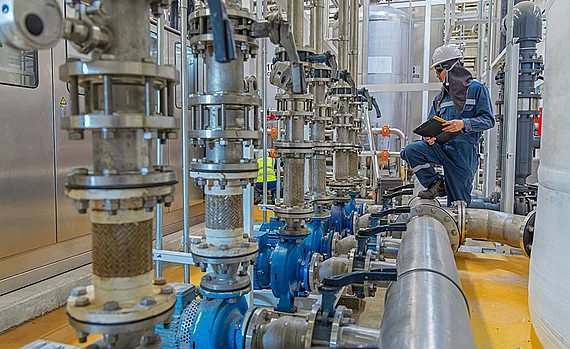
KALL Ingredients demonstrates how this can be turned into an operational concept at its site in Tiszapüspöki, Hungary. The manufacturer of starch and sweeteners has been operating a 56 MWh Heatcube from storage provider Kyoto Group there since October 2025. During charging, a circulating molten salt solution is heated to over 400 °C using electric resistance heaters and then stored in insulated tanks. During discharging, the hot salt flows to the steam generator, where it transfers its heat to the feed water. Charging takes place at up to 10 MW, whilst just under 7 MW of thermal output is available during discharging. The plant is expected to supply more than 30 GWh of process heat annually.
What is interesting is that the storage system turns steam generation into a controllable electrical load. Production receives a continuous supply of steam, whilst electricity procurement can be shifted to hours with low prices or high renewable generation. According to Kyoto, the plant also participates in the Hungarian flexibility and balancing energy market. This means that several economic levers are at work simultaneously: reduced natural gas consumption, cheaper electricity procurement, system services and potentially avoided peak loads.
The business model is also noteworthy: KALL procures heat under a ‘Heat-as-a-Service’ model. The operator purchases steam as a service, rather than having to manage storage and electricity procurement itself. This is particularly attractive for existing sites. The existing gas-fired boiler does not therefore have to be removed from the plant immediately. Electrothermal boilers or heat pumps can initially handle periods when electricity is cheaper; the storage tank extends these operating windows, whilst the boiler remains in place for peak loads and redundancy. The fuel switch does not happen overnight; instead, the operating shares shift gradually – and model calculations by the IEA show that this can be cost-effective.
It is not just electricity that is generated at the wrong time. Industrial waste heat, too, often does not match current demand. According to the German storage provider Kraftblock, a 20 MWh high-temperature solid-state storage system has been in operation at Tata Steel in Jamshedpur, India, since May 2025, utilising hot exhaust air from a sinter cooler. After sintering – the process step in which fine iron ore particles are thermally bonded together – the hot material must be cooled. The storage system absorbs the heat released during this process and later feeds it back into the sintering process. This measure adds a temporal dimension to traditional heat integration. A pinch analysis shows how a process’s heat sources and sinks can be coupled in the most energy-efficient way. A storage system resolves the temporal constraint: the heat source no longer needs to be available at the exact same moment as the sink.
Steel, cement, glass and ceramics plants in particular have abundant hot flows. The challenge lies in matching temperature, heat quantity, location and timing appropriately. The storage system does not create a new energy source from this – but it does create one that can be scheduled.
Chemical parks can also benefit from this. At Yara in Porsgrunn, a 4 MWh storage unit from Energynest is integrated directly into the steam network. Excess high-pressure steam condenses in pipe coils and transfers its heat to Heatcrete, a composite concrete developed specifically for high temperatures. The condensate is collected. When demand rises, the storage system releases the heat, causing the condensate to evaporate again and feed low-pressure steam into the plant network. According to Energynest, the system operates at around 34 bar during charging and 5 bar during discharging. This allows steam energy to be shifted over time, rather than immediately expanding or discharging surpluses.
At the same time, thermal storage systems are venturing into temperature ranges that were previously achieved almost exclusively using fuels. At Electrified Thermal Solutions in San Antonio, Texas, a 20 MWh thermal battery – similar to the Covestro plant described above – supplies hot air at temperatures of up to 1,500 °C. Unlike the Brunsbüttel example, however, electrically conductive bricks in the so-called Joule Hive themselves form the resistance: electricity heats the brick body directly, and during discharge, air absorbs the stored heat.
In principle, the temperature range extends to processes such as biomass gasification or methane reforming. This means that electric heating is making inroads into areas where gas-fired systems or hydrogen were previously considered the obvious decarbonisation options. However, temperature alone is no substitute for a burner. In the case of furnaces and reactors, factors such as the proportion of radiant heat, heat flux density, gas atmosphere, temperature distribution, heating rate and the behaviour of the material and product are just as important as thermal output and temperature range. Hot air at 1,500 °C can replace a fossil-fuel-based heat source – but not automatically its effect on the process. Where only high temperature is required, high-temperature electrical storage significantly expands the options. Where a gas also acts as a reactant or creates a defined atmosphere, the molecule remains a key factor.
Hybrit in Luleå, Sweden, illustrates such a case. SSAB, LKAB and Vattenfall have been operating an underground hydrogen storage facility there since 2022. The pilot plant is designed as a ‘lined rock cavern’: a steel-lined cavern blasted into the rock for pressurised hydrogen. The storage volume is around 100 m³. The hydrogen is neither converted back into electricity nor simply burned off. In direct reduction, it removes oxygen from the iron ore; water vapour is produced instead of CO₂. The molecule therefore acts as the reducing agent itself.
The storage facility separates two different operating modes. Whilst the electrolyser can respond more closely to electricity supply and price, whilst the direct reduction plant still receives a reliable flow of hydrogen. The cavern thus stores not only energy but also a process feedstock. The same chain would be harder to justify for process steam: electricity is first converted into hydrogen, which must then be compressed and stored before being burnt again. Every step reduces efficiency and requires capital. Hydrogen therefore demonstrates its strengths particularly in material applications, long storage periods, transport and processes that are difficult to electrify directly. It thus addresses a timescale that most industrial heat storage systems in use today cannot cover economically: from bottlenecks lasting several days to seasonal storage.
Data from the IEA’s Global Hydrogen Review 2026 shows that this has not yet developed into a mass market: production of low-emission hydrogen was below one million tonnes in 2025; in 2026, its share of total hydrogen production is expected to be just over one per cent. Although installed electrolysis capacity exceeded four gigawatts in 2025, the IEA estimates that by 2030, only around 4.3 million tonnes of annual production will be secured through existing or firmly committed projects – compared with an announced pipeline of around 27 million tonnes. There remains a significant gap between announcements and investment decisions.
However, it is not just the technology that determines how quickly such individual projects develop into a market. China demonstrates what scaling can achieve: according to the industry association CNESA, around 145 GW of so-called ‘new-type’ storage had been installed there by the end of 2025 – compared with just around 3 GW four years earlier. China uses this term to encompass storage systems other than traditional pumped-storage power stations, primarily batteries, but also compressed air, flywheel and thermal systems. The government’s expansion plan already targets 180 GW by the end of 2027.
Other regions are focusing less on volume and more on economic guidelines. Europe combines a CO₂ price and targets with direct funding; the Innovation Fund’s Industrial Heat Auction, launched in 2025, alone is providing up to one billion euros for the electrification of industrial heating. The US stimulates investment more strongly through tax credits, even though the support framework was reorganised in 2025. India, on the other hand, faces a different challenge: industrial energy demand there is growing so rapidly that storage and hydrogen programmes are primarily intended to prevent new production capacities from being locked into fossil fuels for decades.
The instruments may differ, but the technical implications are similar: more volatile generation calls for heat pumps, electric heat generators, storage systems, heat exchangers and power electronics. However, the real competitive advantage arises where these components do not simply coexist, but function as a system.
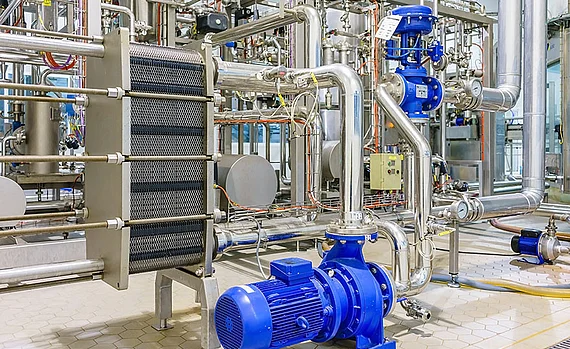
The integration of heat pumps, electric boilers, storage tanks and reserve boilers creates a new optimisation challenge for plant operation. The Kopernikus SynErgie project, in which DECHEMA is involved, therefore investigates not only the flexibility of individual production processes but also, explicitly, the degrees of freedom within industrial infrastructures. As part of this, information and communication technology components have been developed that enable systems to respond automatically to electricity market signals. The storage tank level, current heat demand and available electrical power thus become operational variables that are incorporated into the control strategy alongside traditional process parameters.
The International Energy Agency (IEA) has modelled the potential economic impact of this for hybrid heating systems. In its Germany scenario, electric boilers, thermal storage and existing gas boilers are optimised against one another depending on the hourly electricity price. Based on 2024 prices, the storage system could more than halve the average electricity costs of electric heat generation compared with an electrode boiler operating on its own; under the model’s assumptions, the payback period for the additional investment in storage and hybridisation was around five years. At the same time, the IEA points out that such results depend heavily on electricity and gas prices, CO₂ costs, storage capacity and the number of favourable charging windows. Additional revenue may be generated if the site is able to provide balancing energy or other grid services.
One factor that is often underestimated is the grid connection. According to the IEA, a lack of grid capacity has now become a critical bottleneck for new generators, storage facilities and electricity consumers. The electrification of industrial heat, in particular, may require additional capacity in the megawatt range. In its cost-benefit analyses for process heat, the IEA even excludes connection costs due to the significant site-specific variations – but expressly emphasises that these can make a project considerably more difficult.
The actual integration of the plant also involves considerable engineering effort. A Fraunhofer ISI study on the direct electrification of industrial process heat therefore analyses the different requirements of individual processes separately – from temperature and heat transfer to the appropriate electrical technology in each case. At the same time, the IEA is calling for international technical standards to make it easier to combine components and achieve economies of scale. For existing plants, however, the specific interface remains site-dependent: steam parameters, heat exchanger capacity, temperature levels, available grid power, installation space and redundancy concepts determine how large storage systems and electrical heat generation units can actually be.
The integration of new storage technologies also shifts the safety concept. A brick storage system operating at up to 1,500 °C poses different challenges to a molten salt system at over 400 °C or a high-pressure hydrogen storage system. For thermal storage systems, key considerations include material resistance, thermal expansion, corrosion, leak control and the safe handling of hot media. Hydrogen, in addition, imposes high demands in terms of leak-tightness, the prevention of ignition sources and explosion protection.
Process safety remains regulated at regional level, but is increasingly harmonised internationally from a technical perspective. Depending on the market, pressure equipment is governed by standards such as the European Pressure Equipment Directive or the ASME Boiler and Pressure Vessel Code; for explosion protection, IEC 60079 and IECEx serve as key international references, supplemented by regional systems such as ATEX in Europe. For hydrogen, specific safety standards as well as national accident prevention and process safety regulations apply. Whilst the technology may scale globally, the safety concept must therefore always be tailored to the relevant legal jurisdiction.
It is at this point, if not before, that it becomes clear that storage is becoming a classic challenge for plant engineering: it must not only function efficiently from an energy perspective, but also be safe, controllable and integrated into existing operations without creating any new vulnerabilities. The better this is achieved, the less noticeable it is in day-to-day operations.
What this means in practice can be seen from the project described at the outset. The thermal storage facility in Brunsbüttel is only technically viable if its operation becomes unremarkable: the storage system must be able to follow the electricity market, whilst the steam supply must not. Wind conditions and prices may fluctuate, but pressure and temperature must still be available in the central steam network.
This shifts the yardstick for the success of industrial storage systems. What matters is not the largest capacity, nor the most exotic storage material, but the ability to integrate volatile energy into existing processes in such a way that the processes are affected as little as possible. From a process engineering perspective, the storage system thus evolves from an auxiliary unit into an integral part of the utility infrastructure – and surplus electricity becomes a predictable process variable. In Brunsbüttel, this would mean: wind outside, steam inside – and a stack of hot bricks in between.
| Project / Size | Key Figures and Status |
| Covestro / Rondo, Brunsbüttel (DE) | Storage medium: Refractory bricks / Capacity: up to 100MWh / Temperature: up to 1,500 °C / Energy in: Electricity (wind, PV) / Energy out: Steam (via hot air) / Status: Under construction, commissioning end of 2026 |
| KALL Ingredients / Kyoto Group, Tiszapüspöki (HU) | Storage medium: Molten salt / Capacity: 56 MWh (10 MW in / just under 7 MW out) / Temperature: > 400 °C / Energy in: Electricity / Energy out: Steam / Status: In operation since 10/2025 |
| Tata Steel / Kraftblock, Jamshedpur (IN) | Storage medium: Solid (slag-based) / Capacity: 20 MWh (1.5 MW in / 1.8 MW out) / Temperature: up to 500 °C / Energy in: Waste heat (sinter cooler) / Energy out: Heat for process water (sintering) / Status: In operation since 05/2025 |
| Yara / Energynest, Porsgrunn (NO) | Storage medium: Concrete composite (Heatcrete) / Capacity: 4 MWh / Temperature: approx. 243 °C (charging, 34 barg)¹ / Energy in: Surplus HP steam / Energy out: LP steam (5 barg) / Status: In operation since 2025 |
| Electrified Thermal Solutions, San Antonio (US) | Storage medium: Conductive bricks (Joule Hive) / Capacity: 20 MWh / Temperature: up to 1,500 °C / Energy in: Electricity / Energy out: Hot air / Status: In operation |
| Hybrit (SSAB/LKAB/Vattenfall), Luleå (SE) | Storage medium: Hydrogen (lined rock cavern) / Capacity: approx. 100 m³ storage volume² / Temperature: – (pressure storage) / Energy in: Electricity (via electrolysis) / Energy out: H₂ as reducing agent / Status: Pilot operation since 2022 |
¹ Calculated as saturation temperature at the manufacturer's stated 34 barg.
² Geometric volume; not directly comparable in MWh.

Author
Chemical engineer and freelance trade journalist
Pharma Innovation
Process Innovation

Newsletter
With our newsletter you will receive current information on ACHEMA on a regular basis. You are guaranteed not to miss any important dates.
Theodor-Heuss-Allee 25
60486 Frankfurt am Main
Tel.: +49 69 7564-100